San Francisco Bay is one of the most unpredictable bodies of water on the West Coast. Calm mornings often shift to strong winds, choppy waves, and tidal currents that can quickly challenge even experienced boaters.
For charter captain Chris Probst, it’s a reality he navigates every day.
Probst runs Chris P Fish, a Bay Area charter fishing operation. On a recent afternoon, he was trolling for halibut with clients aboard his 25-foot North River Hard Top.
The fishing was routine. The conditions were familiar. And then something unusual appeared in the distance.
“We saw a red object floating out there,” Probst recalls. “At first, we weren’t sure what it was. It just looked odd.”
Curious, the crew steered the boat closer.
As they approached, the situation became clear.
A hand was waving from the water.
The red object turned out to be an overturned kayak. Clinging to its side was a lone kayaker, fortunately wearing a life jacket.
But the conditions were far from forgiving.
The water was a chilly 57 to 58 degrees, enough to risk hypothermia. Strong currents pushed the kayaker farther from shore.
Probst immediately shifted his focus from fishing to rescue.
The first priority was determining the kayaker’s condition.
“I asked him if he was okay and if he needed medical attention,” Probst says. “Or if we needed to call the Coast Guard.”
The man had been in the water for roughly ten minutes after his kayak flipped in the growing wind and chop.
From Probst’s perspective, something about the kayak stood out right away.
“It didn’t look like the kind of kayak you normally see people fishing out here,” he says. “It just wasn’t the right type of boat for these conditions.”
Approaching someone in the water requires control, stability, and a vessel capable of maneuvering safely in shifting conditions.
Probst eased his North River alongside the kayaker and prepared to board him.
Using the stern ladder and offshore bracket, the kayaker climbed onto the boat.
The North River’s thoughtful design made the rescue process straightforward.
“We lowered the ladder, and he was able to get right up onto the boat,” Probst says.
Once safely on board, the crew righted the kayak and tried to help the man back into it.
But the vessel had taken on too much water.
“As soon as he tried to get in, it just sank,” Probst says. “The whole thing was completely waterlogged.”
At that point, the decision was simple: the safest option for everyone was to bring the kayaker back to shore, highlighting the importance of prioritizing safety in unpredictable situations.
San Francisco Bay’s powerful tides were already carrying the overturned kayak away from favorable currents.
Had help arrived later, the situation could have become much more dangerous.
Probst doesn’t view the moment as extraordinary.
“I feel like I just did what anyone would do,” he says.
But looking back, he recognizes how quickly conditions could have worsened.
“You don’t want to be in that water for an hour,” he says. “When I reflect on it, yeah, if we weren’t there, it could have been a lot worse.”
Because of the quick rescue, the kayaker did not require medical attention and was safely returned to shore.
Stories like this show exactly why North River builds boats with safety and performance in mind.
In sudden emergencies, captains count on North River’s strength, stability, and design to respond safely.
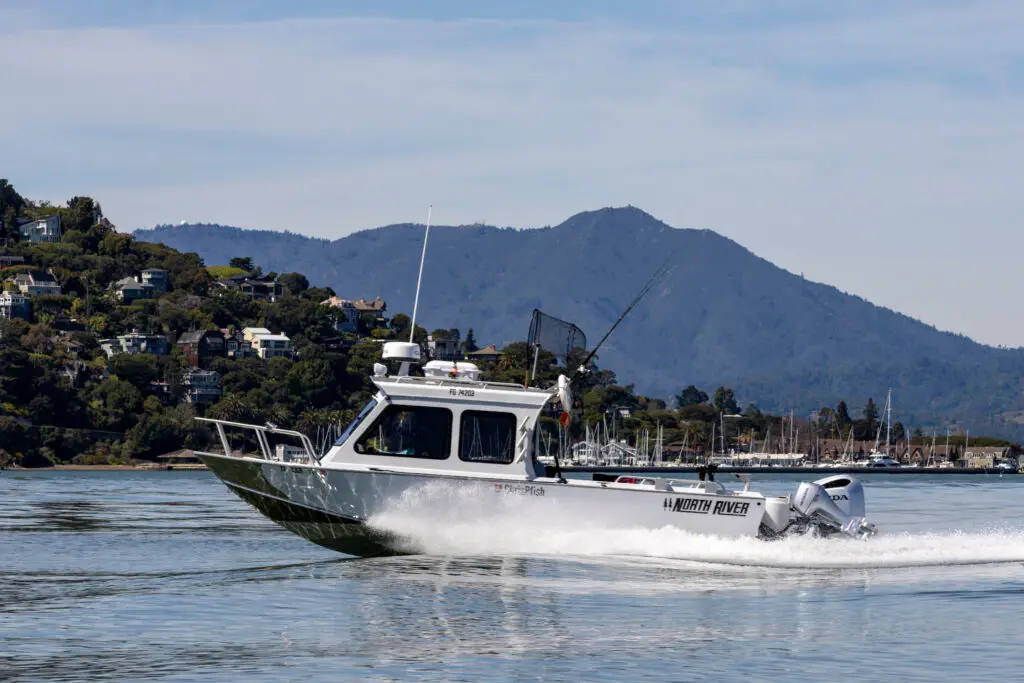
North River boats are built from heavy-gauge marine-grade aluminum and engineered to withstand demanding environments, such as San Francisco Bay. Combined with practical layouts, enclosed cabins for protection, and accessible stern boarding areas, these vessels are designed not just for fishing or recreation, but for real-world conditions where safety matters.
For Probst, those qualities are part of why he chose a North River in the first place.
“One of the reasons I got the boat is because of how the weather changes out here,” he says. “When the wind comes up, and the water gets rough, it’s nice to be able to close the door and stay protected.”
That same reliability also means being ready when someone else needs help.
The boating community has long shared an understanding: when someone is in trouble on the water, others step in.
Sometimes that means making a call for help.
Sometimes it means offering a tow.
And sometimes, as Probst experienced that afternoon, it means pulling someone out of the water before the situation becomes much worse.
Probst doesn’t call himself a hero.
But the outcome speaks for itself.
A kayaker who could have faced a dangerous drift in cold water made it safely back to shore, thanks to a captain who noticed something out of place, and a boat built to handle whatever the Bay might bring.
At North River, stories of rescue and safety are what matter most.
Because strength on the water isn’t just about performance.
Sometimes, it’s about being there with the right safety measures when it counts.